In this section, you can find a detailed overview of actions taken to eliminate or reduce carbon emissions of Radisson Blu Waterfront Hotel, Stockholm, A Verified Net Zero Hotel*, calculated according to the Greenhouse Gas Protocol.
We are reducing our total carbon footprint as much as possible every year, and the remaining emissions are removed with carbon removal credits from Agreena, resulting in a net zero footprint.
*This hotel has achieved Net Zero status in alignment with the 2040 Net Zero Methodology for Hotels, with its 2025 GHG emissions reported in accordance with the GHG Protocol.Emissions fully eliminated through electrification and verified energy transition.
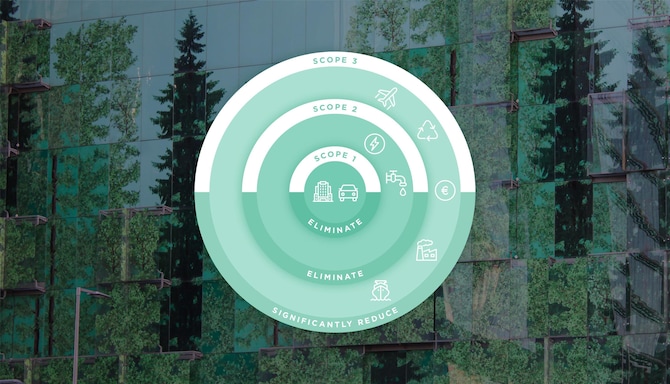
The main categories for Scope 1 in the GHG Protocol and according to Verified Net Zero Methodology are:
- Combustion of primary fuels onsite i.e. natural gas
- Fugitive emissions from refrigerant leakages i.e from HVAC system
- Other combustion of fuels i.e. terraces heaters, lawn mowers
- Transportation of guests arranged by the hotel to/from the destination i.e. Shuttles*
Actions taken to bring Scope 1 footprint to zero:
- System electrification to eliminate direct fossil fuel use
- Overall good maintenance practices of the systems to prevent refrigerant leakage
*This hotel does not provide shuttle service to guests.
The main categories for Scope 2 in the GHG Protocol and according to Verified Net Zero Methodology are:
- Purchased electricity
- Purchased heating and cooling
Actions taken to bring Scope 2 footprint to zero:
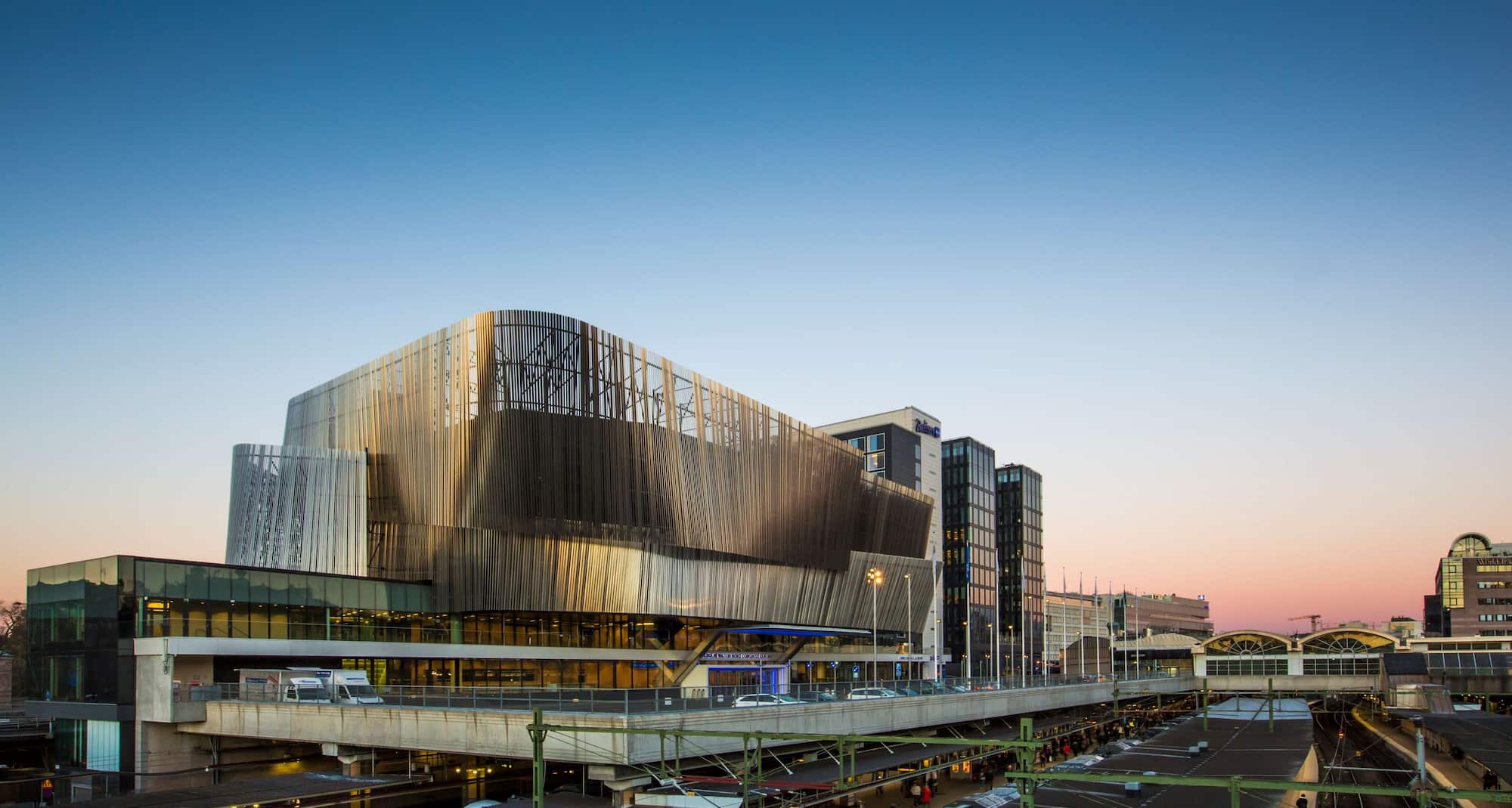
- The stunning facade of the Stockholm Waterfront Congress Centre is created by reusing the material from the building previously occupying the site. We use advanced technology for heating energy in many aspects of the building. The large glass facades are 1,040 square meters of solar panels, which on average gather 1 MW of heat energy on a daily basis—equivalent to 90,000 normal low-energy bulbs!
- The building is cooled by water drawn from the nearby Lake Mälaren, which is stored in 250-ton ice tanks in the hotel’s basement and used to regulate the temperature in the building. Heating and air conditioning are distributed depending on needs and circumstances, and the consumption is adapted according to the amount of solar radiation, water temperature, weather statistics, and weather forecasts. This excellent energy solution was designed to cut CO² emissions and minimize the impact on the environment and climate change.
- The Waterfront Congress Centre has received the Leadership in Energy and Environmental Design Gold certification, which is an international recognition of the building's consideration of environmental aspects. Stockholm Waterfront Congress Centre is one of the most energy-efficient buildings in the world.
- In addition, we ensure the purchased electricity is from renewable sources, supported by tracking mechanisms like Guarantees of Origin (GoO) or under verified sourcing contracts.
- The hotel is using the district heating network, provided by Stockholm Exergi. 98% of the district heating is generated from renewable or recycled fuels, with the goal of achieving 100% in the coming years.
*This hotel does not purchase district cooling.
The main categories for Scope 3 in GHG Protocol and according to Verified Net Zero Methodology are:
- Purchased goods and services: food and beverage, outsourced laundry amenities, disposables and printing
- Fuel and energy related activities—T&D Loss, WTT electricity and fuels*
- Upstream transportation and distribution of energy*
- Waste generated in operations: waste and wastewater
- Business travel and employee commuting
*This category is out of the hotel's control.
1. Work with suppliers to identify products and actions with a reduced carbon footprint, measure impact, and plan for continuous improvement
2. Food & Beverage Emission reduction—low-carbon menus with Klimato
- All menus have been analysed with Klimato and curated to lower the overall footprint.
- On the breakfast buffet, similar products to the current offer have been replaced with low carbon alternatives.
- Guests are informed by easy-to-understand labels, expressing the recipe’s carbon footprint.
- The footprint of the recipes is reduced by up to 40%.
3. Minimal waste hotel
- Recycling bins are available in all guestrooms and main public areas
- Running waste audits to ensure maximum waste reduction and recycling
- Bulk amenity dispensers are recycled with Clean the World
- Glass water bottles are provided in the guest and meeting rooms
- The signature coffee pods are recycled together with Nespresso
- In addition, our kitchens have installed a food waste reducing technology (e-Smiley)
- Surplus food which is offered on the social economy app Too Good To Go.