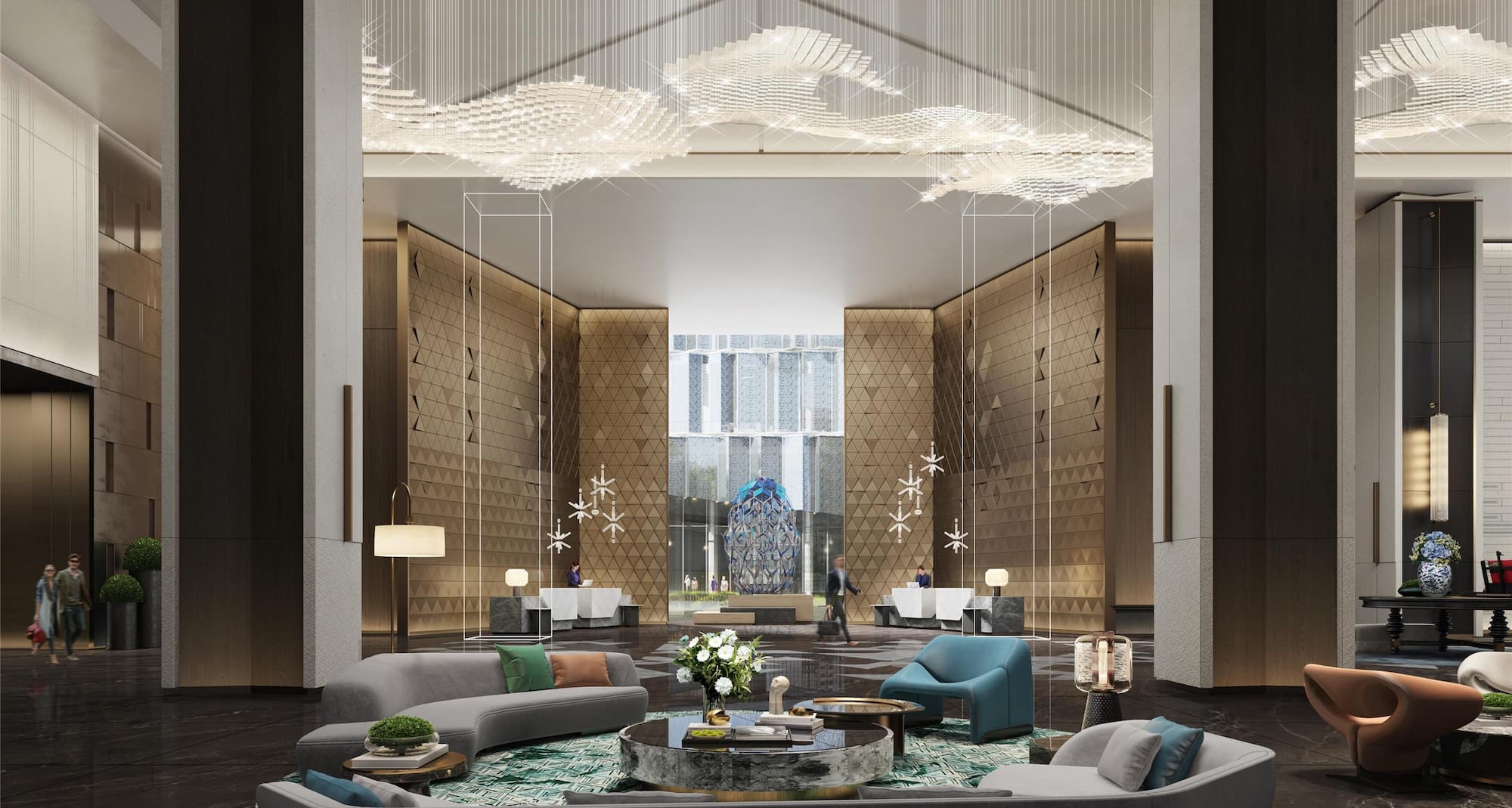

Radisson Blu Hotel, Nanjing South New Town is ideally situated in the heart of the southern new town, blending modern urban life with Nanjing’s rich cultural heritage.
The high-speed railway station and Xinjiekou commercial district are easily accessible via the nearby subway, while the Confucius Temple - Qinhuai River Scenic Belt is just a 10-minute drive away.
Explore landmarks, historic sites, cultural districts, and shopping areas all within reach of the hotel and make your stay in Nanjing a memorable one.
One of the main airports in the area. Check our "how to arrive" section for more information.
Xinjiekou Commercial District, located in the heart of Nanjing, is known as the city’s top shopping destination, featuring numerous malls, convenient transport links, and a lively atmosphere that showcases the commercial spirit of Jinling.
Spanning over 80,000 square meters, Zhongshan Scenic Area is home to Zhongshan Mausoleum along with Ming Xiaoling Mausoleum, Linggu Temple, and other notable attractions.
The Presidential Palace in Nanjing spans approximately 50,000 square meters, blending traditional Jiangnan gardens with modern-era architecture. With over 600 years of history, it has served as a key political and military center in China, making it a landmark rich in cultural and historical significance.
Nanjing Museum, one of China’s three major museums, was founded in 1933 as the National Central Museum under the guidance of Cai Yuanpei. It is China’s earliest state-established comprehensive museum and remains a landmark for its extensive collections, cultural significance, and role in preserving Chinese history and art.
The Fuzimiao Qinhuai Scenic Area is a historic cultural hub and home to one of China’s four great temples of literature. Dating back to the Ming and Qing dynasties, it served as the city’s center for education, culture, and commerce, and is now one of the largest traditional markets in China.
The East Zhonghua Gate Historical Culture Block, also known as Laomendong, is a revitalized historic district in Nanjing’s Qinhuai District, east of Zhonghua Gate. Dating back to the Three Kingdoms period, it features traditional Jiangnan architecture with white-washed walls, grey-tiled roofs, and intricate wooden carvings.