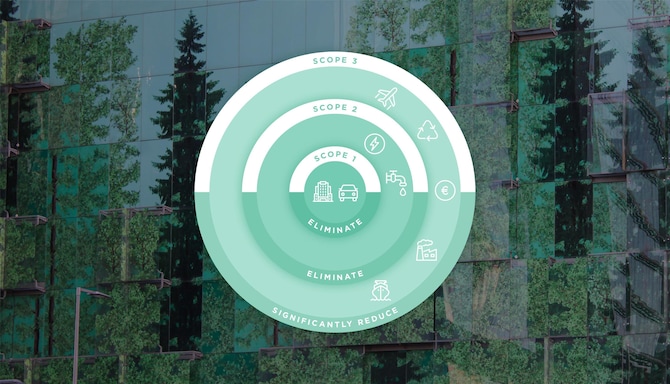
In this section, you can find a detailed overview of actions taken to eliminate or reduce carbon emissions of Radisson Safari Hotel Hoedspruit, A Verified Net Zero Hotel*, calculated according to the Greenhouse Gas Protocol.
We are reducing our total carbon footprint as much as possible every year, and the remaining emissions are removed with carbon removal credits from Green Trade, resulting in a net zero footprint.
*This hotel has achieved Net Zero status in alignment with the 2040 Net Zero Methodology for Hotels, with its 2025 GHG emissions reported in accordance with the GHG Protocol.Emissions fully eliminated through electrification and verified energy transition.
The main categories for Scope 1 in the GHG Protocol and according to Verified Net Zero Methodology are:
- Combustion of primary fuels onsite i.e. natural gas
- Fugitive emissions from refrigerant leakages i.e from HVAC system
- Other combustion of fuels i.e. terraces heaters, lawn mowers
- Transportation of guests arranged by the hotel to/from the destination i.e. Shuttles*
Actions taken to bring Scope 1 footprint to zero:
- System electrification to eliminate direct fossil fuel use
- Overall good maintenance practices of the systems to prevent refrigerant leakage
- Limited use of fireplaces. They still generate a small amount of emissions; however, they are used only a few hours per week and burn invasive wood species, helping to control local ecosystems while providing fuel.
*This hotel does not provide shuttle service to guests.
Emissions fully eliminated through electrification of the hotel and renewable energy onsite or procured.
The main categories for Scope 2 in the GHG Protocol and according to Verified Net Zero Methodology are:
- Purchased electricity
- Purchased heating and cooling
Actions taken to bring Scope 2 footprint to zero:
- Ensure purchased electricity is from renewable sources, supported by tracking mechanisms like Guarantees of Origin (GoO) or under verified sourcing contracts
- Prioritizing locally generated renewable energy to power hotel operations
Emissions significantly reduced through systems implementation and partners.
The main categories for Scope 3 in GHG Protocol and according to Verified Net Zero Methodology are:
- Purchased goods and services: food and beverage, outsourced laundry amenities, disposables, and printing
- Fuel and energy related activities—T&D Loss, WTT electricity and fuels*
- Upstream transportation and distribution of energy*
- Waste generated in operations: waste and wastewater
- Business travel and employee commuting
*This category is out of the hotel's control.
Carbon removals are the final step in our net-zero journey. While our priority is always to eliminate and reduce greenhouse gas emissions across our operations and value chain, some residual emissions cannot yet be avoided. To address these remaining emissions, we invest in high-quality Nature-Based carbon removal credits through our partnership with GreenTrade.
Through the Grassland Restoration and Stewardship in South Africa (GRASS) Project, developed by The African Stove Company Limited (TASC) and Meat Naturally Africa NPC, we support the restoration of degraded grasslands and savannas using regenerative grazing and sustainable land management practices across South Africa. This pioneering soil carbon project enhances carbon sequestration, improves soil health, strengthens biodiversity, increases water retention, and supports the livelihoods and resilience of rural farming communities. By supporting GRASS, we contribute to credible, verified carbon removals while delivering lasting environmental and social benefits at landscape scale.